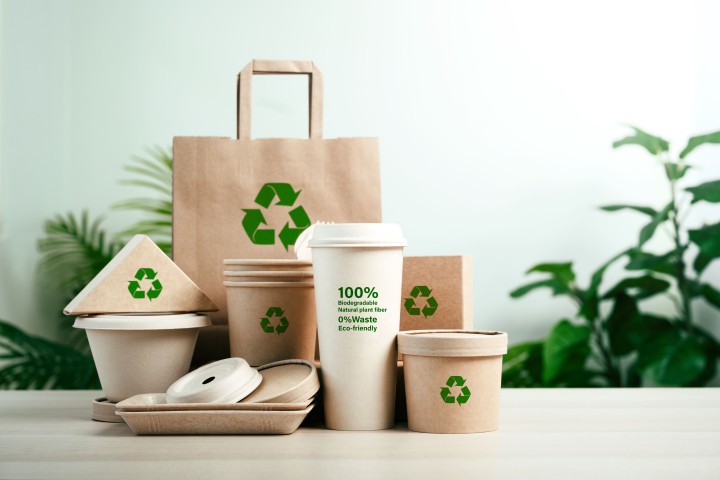
Sustainability has for some time been playing an increasingly important role in the way companies market their products, services and/or activities. Terms such as “environmentally friendly”, “sustainable” or “green”, as well as logos, labels, images and even colour schemes, can create a certain impression among consumers regarding the sustainability of a product, service or company.
Although the prohibition of misleading commercial practices towards consumers is already enshrined in the Belgian Code of Economic Law, the European Union considered it necessary to further strengthen consumer protection in the context of the green transition. Research conducted by the European Commission reportedly showed that more than half of the environmental claims examined were vague, misleading or insufficiently substantiated.
Directive (EU) 2024/825 (EmpCo – Empowering Consumers for the Green Transition) therefore further tightens the rules. The Directive targets not only misleading environmental claims and greenwashing, but also, among other things, misleading information regarding social characteristics, the omission of relevant information and the use of unreliable sustainability labels.
In Belgium, the EmpCo Directive has now been transposed through the Act of 22 July 2026, which amends several provisions of the Belgian Code of Economic Law and integrates the new rules on sustainability communication into the existing consumer protection framework. These new rules will enter into force on 27 September 2026.
For businesses, this means that marketing materials (including social media content), websites, packaging, product information and sustainability communications should be reviewed thoroughly and in a timely manner.
New pre-contractual information obligations
From now on, businesses must clearly inform consumers, prior to the conclusion of a contract, about:
- The statutory minimum two-year legal guarantee, using the harmonised notice issued by the European Commission (available via the following link);
- The minimum period during which software updates will remain available;
- The European repairability score / repairability index (a score indicating how easily an electrical or electronic device can be repaired), where applicable, or otherwise repair-related information such as the availability and cost of spare parts, repair restrictions, etc.;
- The existence of a commercial durability guarantee exceeding two years, where applicable;
- After-sales services and commercial guarantees, where applicable.
In the case of online sales, businesses must also provide information regarding environmentally friendly delivery options, such as delivery by electric bicycle.
Stricter rules for environmental and sustainability claims
Businesses are now expressly prohibited from misleading consumers regarding the environmental, social and circularity-related characteristics of a product, such as its recyclability, durability and repairability.
Environmental claims relating to future environmental performance, such as “climate-neutral by 2035”, will also be subject to stricter regulation. Companies communicating about a future transition towards climate neutrality or carbon neutrality will need to substantiate such claims by means of an implementation plan containing objective, publicly available, measurable and verifiable targets. In addition, progress must be monitored regularly by an independent expert.
Furthermore, it will no longer be permitted to advertise benefits that are irrelevant and do not result from a characteristic of the product itself, for example: “bottled water is lactose-free” or “paper sheets contain no plastic”.
Comparisons between products based on their environmental or social characteristics, or their circularity aspects, will also be subject to stricter requirements. Such comparisons will only be permitted where clear information is provided regarding the comparison methodology, the products being compared, the suppliers of those products and the measures in place to keep that information up to date.
Twelve new misleading commercial practices that will now always be prohibited
The new legislation also adds twelve new commercial practices to the blacklist of prohibited practices. These practices are prohibited in all circumstances.
- The use of sustainability labels that are not based on a certification scheme or have not been established by public authorities. Creating one's own “eco-labels” will therefore no longer be permitted.
- Generic environmental claims such as “environmentally friendly”, “eco-friendly” or “ecological”. Such claims are considered vague and do not convey any concrete information. These generic environmental claims will therefore no longer be permitted unless they are accurate, verifiable and not misleading. In other words, businesses must be able to demonstrate recognised outstanding environmental performance.
- Environmental claims relating to an entire product or to all business activities of a company where only one aspect actually complies with the claim. For example, advertising a product as “made from recycled materials” when only the packaging consists of recycled materials.
- Claims that a product has a neutral, reduced or positive environmental impact, such as “climate-neutral”, “reduced climate impact” or “low carbon footprint”, based on greenhouse gas offsetting, unless such claims are based on the product's actual life-cycle impact.
- Presenting legal requirements as a distinctive feature. For example, advertising that a product does not contain a particular chemical substance when that substance is already prohibited by law for all products within the relevant product category.
- Withholding information that a software update will negatively affect the functioning of a product.
- Claiming that a software update is necessary when it merely improves functionality features.
- Any commercial communication relating to goods incorporating features deliberately designed to limit durability or lifespan, where the business is aware of those features.
- Claiming that a product has a particular level of durability under normal conditions of use while this is not the case.
- Presenting a product as repairable when it is not.
- Encouraging consumers to replace or replenish consumables earlier than technically necessary. For example, urging consumers to replace ink cartridges before they are empty in order to stimulate the purchase of additional cartridges.
- Withholding information that the use of non-original spare parts or accessories may affect the functionality of a product, or falsely claiming that such an impact will occur.
Enforcement
The new rules will be enforced through the existing mechanisms of the Belgian Code of Economic Law. The Economic Inspection may take action against infringements, and competitors and consumers may, among others, initiate cease-and-desist proceedings before the president of the Enterprise Court.
An infringement may have various consequences. Misleading sustainability claims may, for example, need to be amended or removed, and ongoing marketing campaigns may be halted. Depending on the nature of the infringement, penalties may also include administrative fines, settlement agreements with the Economic Inspection and claims for damages. Potential reputational damage should likewise not be overlooked.
Temporary transitional regime
Although the new rules will enter into force on 27 September 2026, the Belgian legislator has provided for a limited transitional regime.
For goods that were produced, packaged or placed on the market before 27 September 2026, no measures may be taken during a six-month period in relation to certain infringements concerning environmental claims about future environmental performance and the newly prohibited commercial practices.
This transitional period is intended to allow businesses to continue selling their existing stock and will expire on 27 March 2027.
Time for action
It is therefore high time to take action. Review existing claims across all channels (social media, websites, packaging, advertising, etc.), update pre-contractual information, verify labels and, where necessary, amend contractual documentation.
***